Jobs that will be in demand in the future

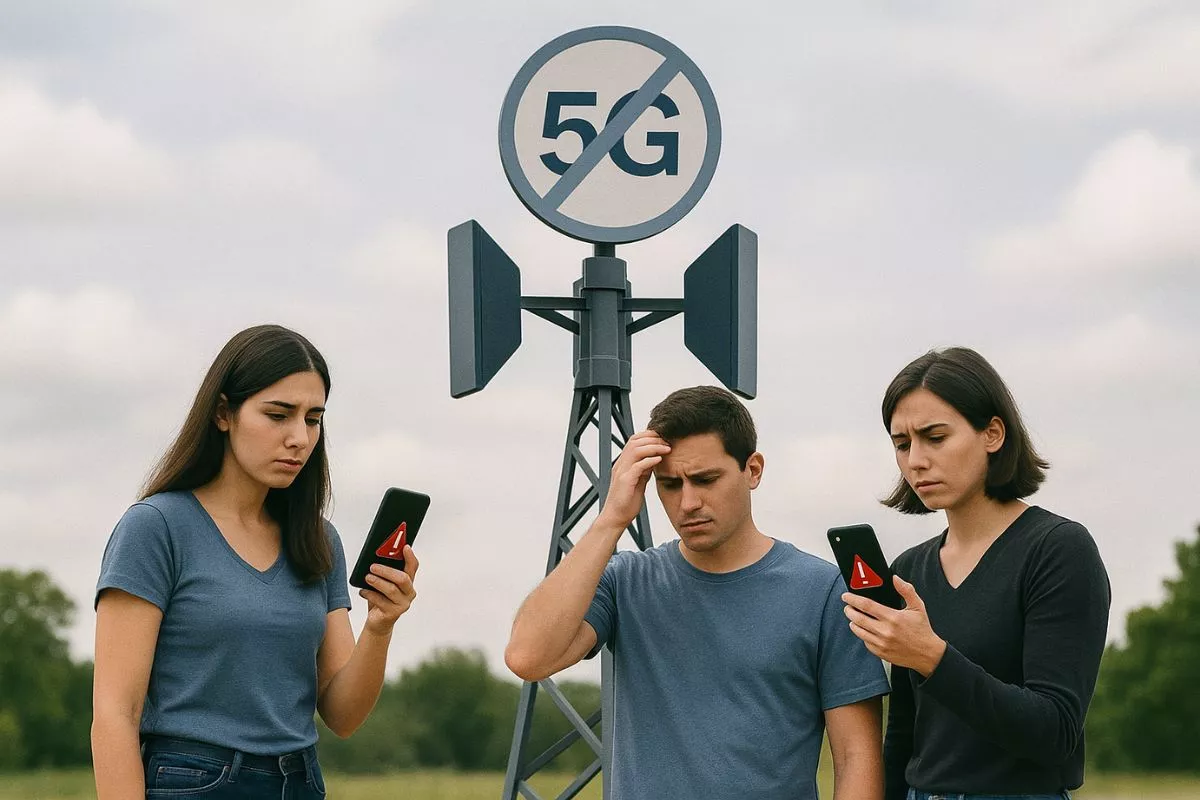
Have you ever imagined what happens if 5G goes down suddenly? The new generation of mobile internet has brought speed and connectivity, but it has also created a strong dependency.
With so many devices connected at the same time, a drop in signal can have an impact that goes far beyond a simple loss of connection.
At the same time, many services today work exclusively on 5G networks, which makes the problem even more serious.
In this article, we'll explain the real risks of a 5G failure, how it affects your day-to-day life and what you can do to protect yourself.
First of all, we need to understand how dependent we are on 5G. It's not just faster - it's essential for many modern technologies.
For example, autonomous cars, remote surgeries, smart factories and even connected farms work on the basis of this high-speed network.
In addition, many video applications, online games, real-time calls and banking systems are optimized for 5G.
With that, any interruption in service can cause entire sectors to failleaving people and companies vulnerable.
A 5G signal drop can affect much more than your cell phone. It can damage emergency communications, public transport, and even security systems.
What's more, smart home devices can stop working properly, such as cameras, voice assistants and connected appliances.
Meanwhile, companies that operate with real-time logistics or remote service can suffer immediate losses.
For this reason, governments and operators invest heavily in network security, but even so, technical failures, cyber attacks or overloads can cause interruptions.
To reduce the impact of a 5G outage, the ideal is to have backup networks. Having traditional Wi-Fi or a 4G network as an alternative can be crucial at critical times.
In addition, companies should invest in network redundancyensuring that essential systems work even with temporary interruptions.
At the same time, ordinary users can download important content offline and activate data-saving options so as not to depend 100% on streaming.
Finally, it's essential to keep up with news about network instability and keep your devices up to date to cope better with temporary failures.
With the arrival of 6G already being planned, dependence on mobile networks is only set to increase. Increasingly, we live in a world hyperconnected and automated.
However, the greater the connection, the greater the risk of interruptions affecting several areas of life at the same time.
This is why discussing the resilience of networks, the decentralization of data and the autonomy of devices is becoming increasingly urgent.
Know what happens if 5G goes down is the first step towards being prepared for a future where connection will be as essential as electricity.






 English